
Article originally written in English. Automated translations may contain inaccuracies.
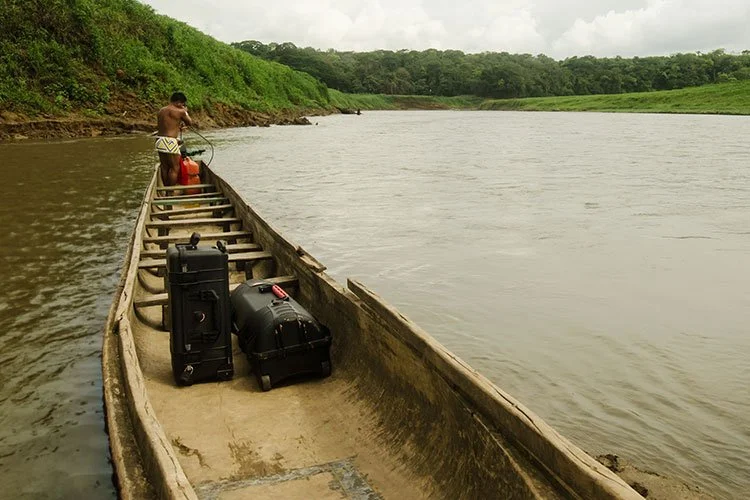
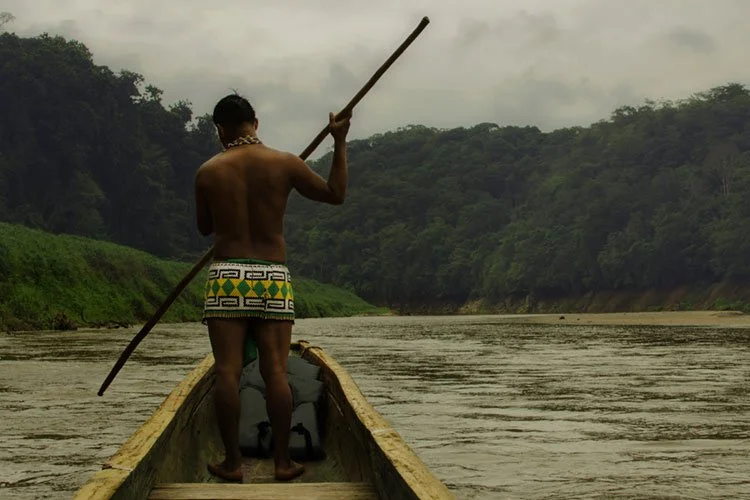
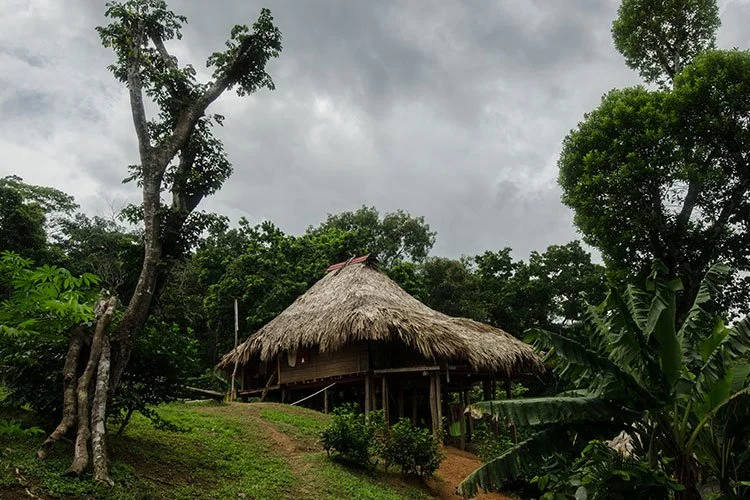
The Tusípono Emberá village is located in the Chagres region of Panama, and getting there involves traveling by piragua, the long wooden boats that remain an important form of transportation along these waterways. There is a sense of separation almost immediately: once the humble dock disappears behind you, the river becomes the connection between the village and everything outside it.
The Emberá presence in Chagres has its own history. Their deeper roots in Panama are associated with Darién, a vast region of rivers and tropical forest farther east. Beginning around the 1970s, Emberá families from Darién established new villages along the Chagres River and surrounding areas, carrying their language, customs and cultural practices into a different territory. Tusípono village is part of that history.
Although Chagres placed these families much closer to Panama City, the villages retained important elements of Emberá identity. Their language continues to be spoken, traditional forms of dress and beadwork remain visible, and practices such as jagua body painting, music, dance and craftwork continue across generations. These are not simply visual traditions; they are part of the ways Emberá identity continues to be expressed and passed on.
That was the setting I was entering, although my purpose was not to document it as a photojournalist. I had gone to Tusípono to make portraits and to spend enough time there for those portraits to develop through personal interaction rather than through a scheduled visit. Cultural exploration, to me, represents understanding a place—or, in this case, an Indigenous group—through people's perspectives and daily life.
For months before the trip, I had prepared myself physically and mentally. I expected heat, humidity, difficult working conditions and several days away from the conveniences of city life. What was harder to prepare for was arriving somewhere —as a portrait photographer— without knowing a single person.
At the dock, two Emberá men were waiting for me. My photography equipment, clothing and supplies went into the piragua, and we traveled toward Tusipono. I remember feeling excitement and uncertainty at the same time. The arrangements that brought me there could provide access to the village, but after arriving, everything depended on how I approached the people who lived there. In my experience, one's own energy and mental state play a key role when photographing people.
For that reason, I kept my camera equipment packed during the first day. I introduced myself, talked casually with people and somewhat explained the kind of portraits I wanted to make. However, I was clear that I would respect their personal spaces and that nobody was expected to participate. I waited for the cacique and his authorization before beginning. The following day, even after receiving it, every person still decided individually whether they wanted to be photographed.
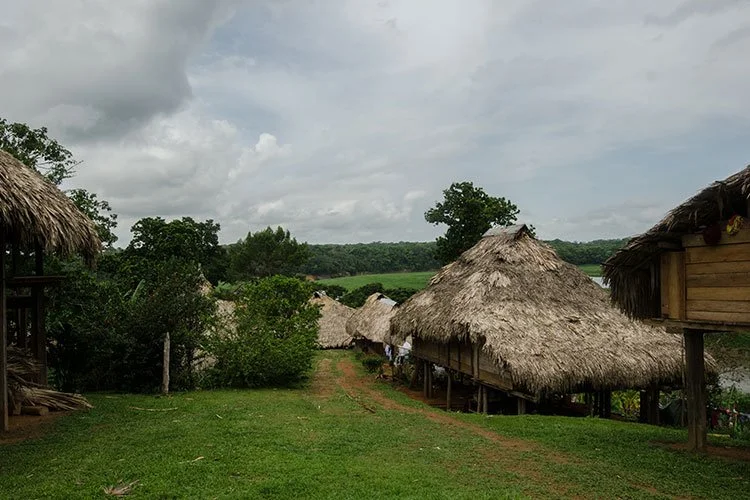
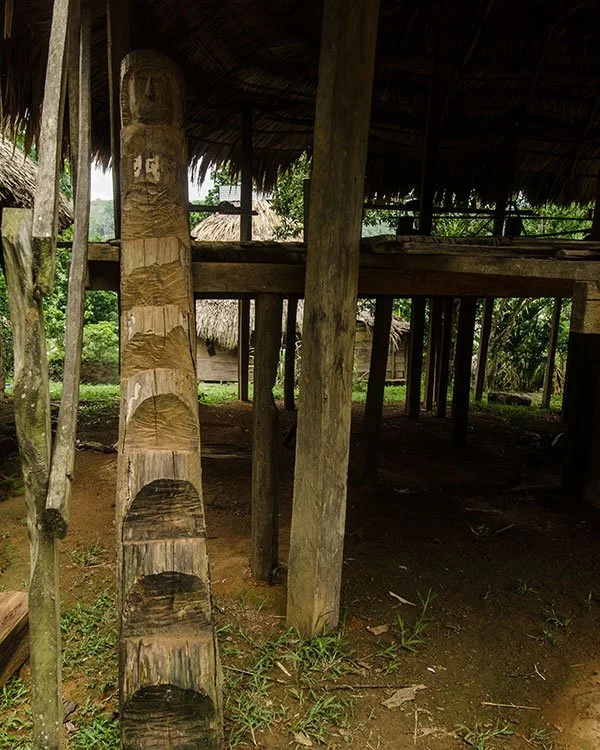
That first day was probably more important to the photographs than anything I did with a camera afterward. I needed to understand the rhythm around me, and they needed some idea of who this stranger with several cases of photographic equipment was and why he had suddenly arrived in their village.
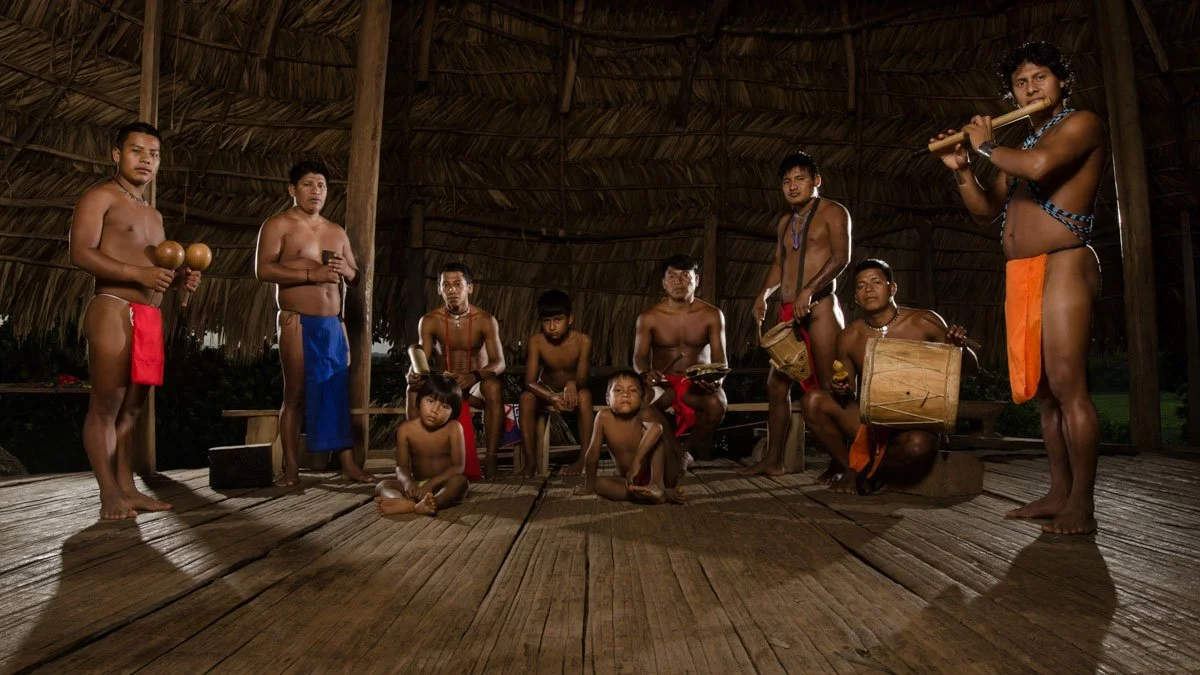
By the second day, cameras and lights began to appear. My approach was technically controlled but flexible: I wanted the visual precision of studio portraiture without removing people from their own environment. I placed a simple background inside a choza, while other portraits were made beside the river, near the houses or deeper into the surrounding forest.
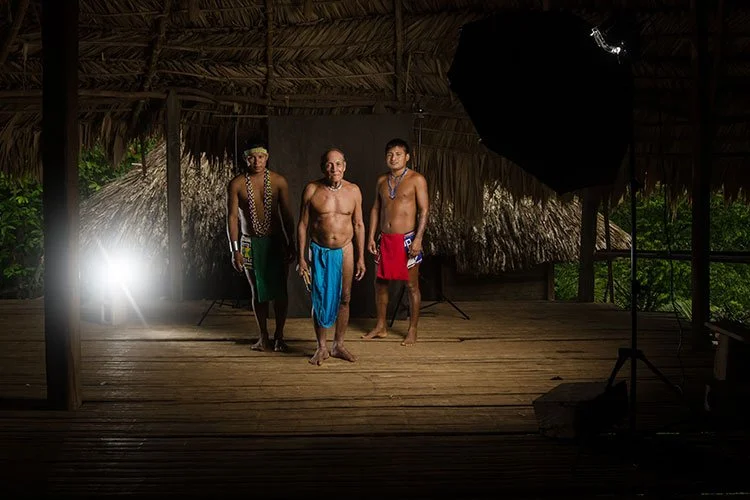
Working there also meant adapting the way I normally use equipment. I had brought cameras, lenses, light stands, modifiers and certainly more batteries than clothing, as each one represented a limited resource. The humidity was equally unforgiving. Being beside the river during Panama's rainy season meant constant heat, moisture, mosquitoes and mud. -Not to mention caimans.
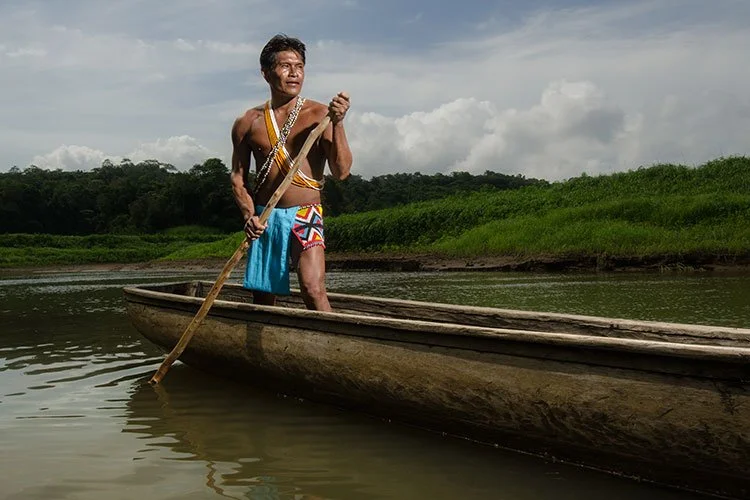
All of that required preparation, but the portraits themselves usually happened quickly. I would first observe the location, decide on the composition and lighting, prepare everything and only then ask someone to step in front of the camera. Most portraits were made within just a few minutes.
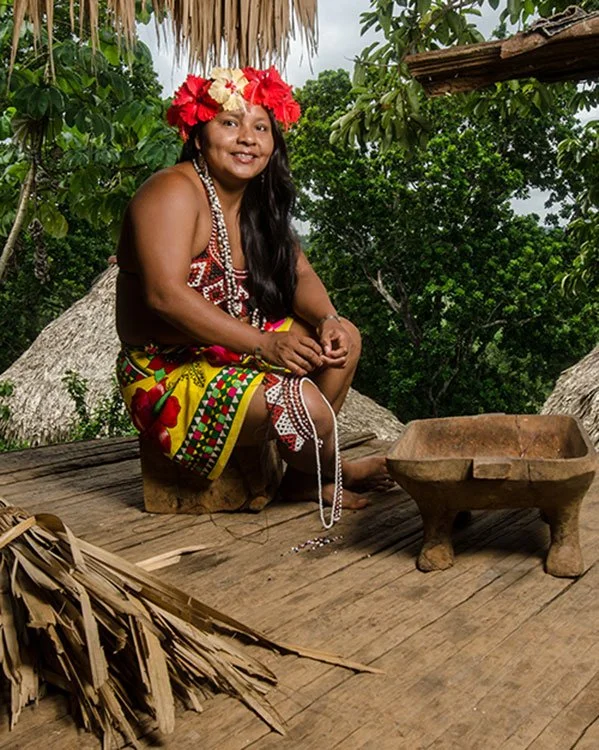
I have always considered technical proficiency part of respecting the person being photographed: they should not have to stand around while I figure out my equipment. My attention remained on the person and how comfortable they felt with the process I created. That became even more important in the village. I was working within their spaces and on their time. Most of the technical work happened before they entered the frame.
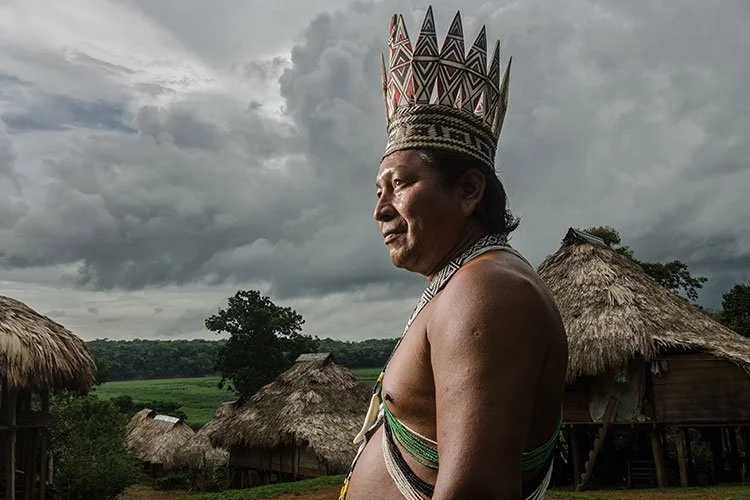
The river gradually became much more than part of the visual setting. Emberá settlements have historically developed around waterways, and in Chagres the piragua continues to connect villages with the surrounding region. During my stay, the river was also my only route in or out and indirectly part of what was feeding me. Fried tilapia and fruit became my regular meals, usually twice a day.
Outside of doing portraits, life became very simple. I had no phone signal and no electrical connection, which meant that communication with the outside world effectively stopped. I slept in a tent on the wooden floor with my camera cases and equipment around me. I sat on the floor, ate there, organized equipment there and slept only a few centimeters above it.
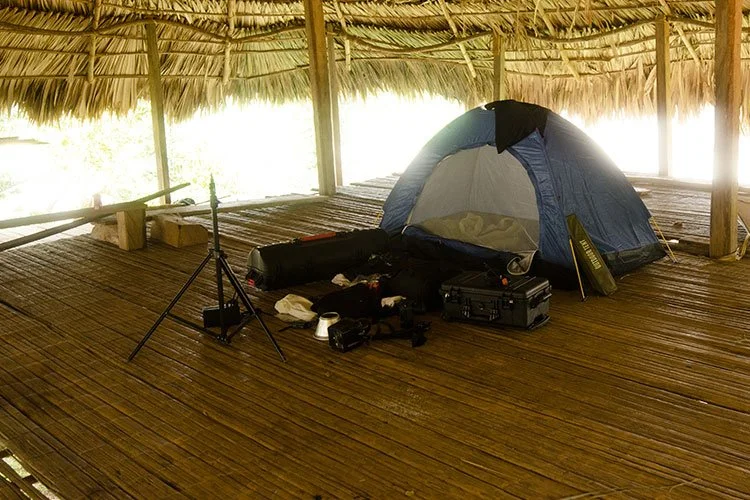
The first two nights were unsettling. When it got dark, people went into their houses and the village became remarkably quiet, as if it were completely empty. I stayed alone in my tent, with little to hear except the sounds of the forest. Given the circumstances, I found it much easier to fall asleep from sheer exhaustion than by trying to force myself to sleep.
During the late afternoon, conversations with some of the villagers could be about life, relationships, food, fishing, football and natural mutual curiosity. There were no interviews and no questions I needed answered. They were simply conversations between people whose everyday experiences happened to be very different. We spoke in Spanish, while among themselves they would sometimes switch naturally to Emberá, and I was fine with that.
Their language remains one of the clearest expressions of cultural continuity among Emberá people, and hearing it used casually between conversations in Spanish made that difference tangible without requiring any explanation from them.
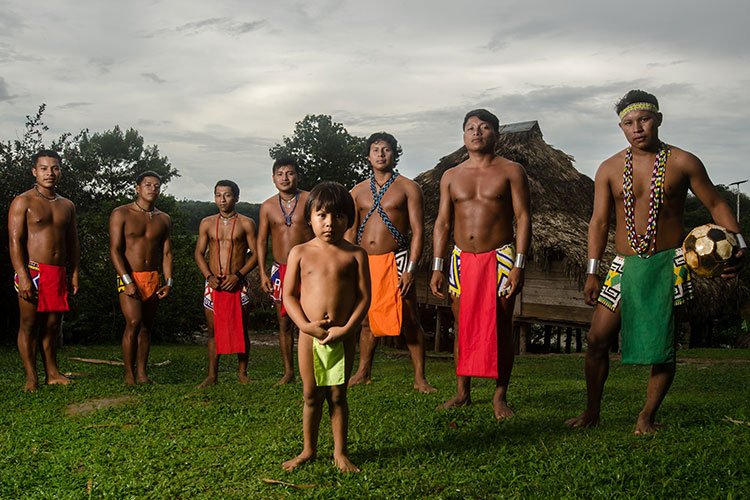
By the third day, things that had initially felt uncomfortable began to feel normal. I was adapting to the heat, humidity, food and sleeping conditions, and the absence of technology stopped feeling like deprivation. Some mornings I would wake around sunrise and hear someone practicing a flute somewhere in the distance. It was not an activity prepared for me; it was simply something happening around the village while another day was beginning.
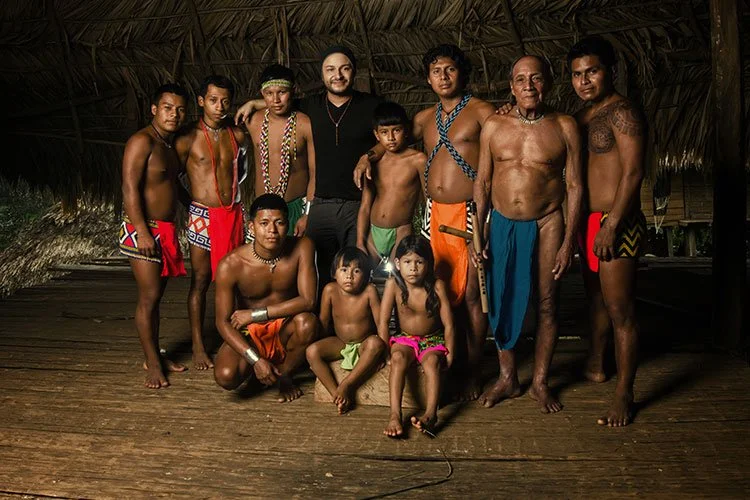
As I spent more time there, I also became more conscious of how people chose to present themselves for the portraits. The clothing, beadwork, flowers and body designs visible in the photographs were not styling decisions I imposed. While I controlled the lighting, composition, posture and expression, they decided how they wanted to appear.
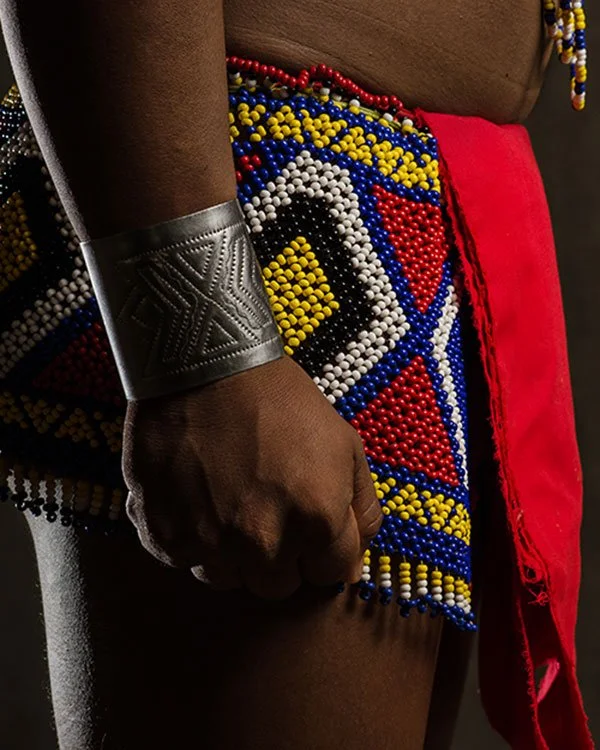
That distinction matters because Emberá clothing and ornamentation carry cultural identity beyond their visual appeal. Beaded necklaces and accessories, forms of traditional dress and jagua designs remain recognizable elements of Emberá self-presentation. Women also maintain traditions of weaving with plant fibers, while carving, music and other forms of manual knowledge continue to be practiced within Emberá villages.
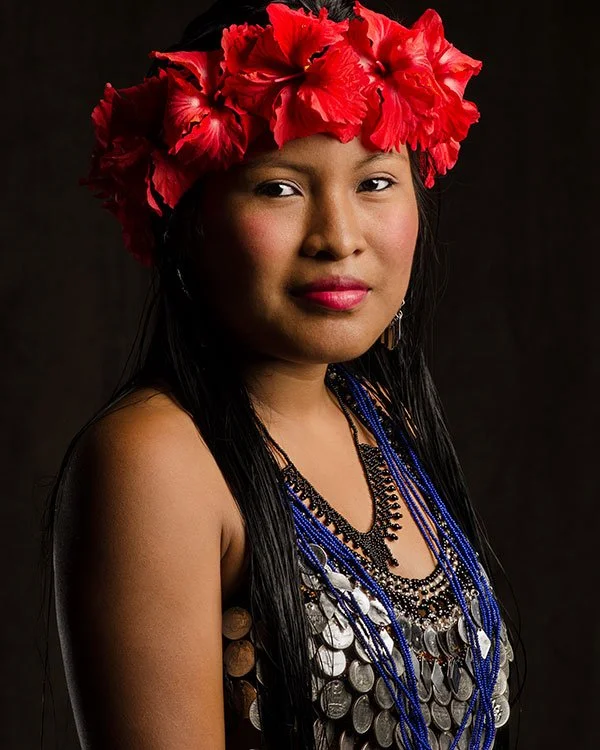
I did not need to ask people to perform those aspects of their culture for the portrait series. They were already present, and I found that far more valuable than attempting to reconstruct an image of Indigenous life.
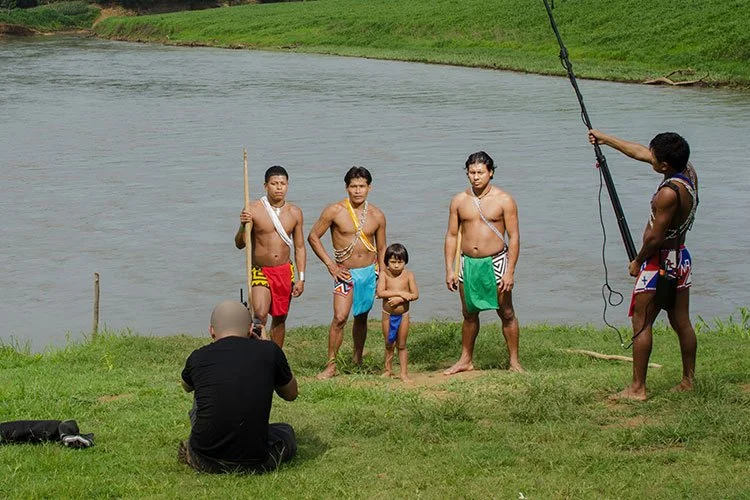
Our mutual curiosity eventually became part of the photographic process. People watched me assemble lights, helped position equipment and asked what different pieces were for. At one point, I gave my camera to one of the young men I had photographed and showed him how to frame and take a picture. Some of the behind-the-scenes photographs of me working in the village exist because of moments like that.
This portrait series included children, young adults, older people and the cacique. Looking at them together, the generational range became one of the aspects of the series that interested me most. The same cultural identity appears differently from one person to another and from one generation to the next.
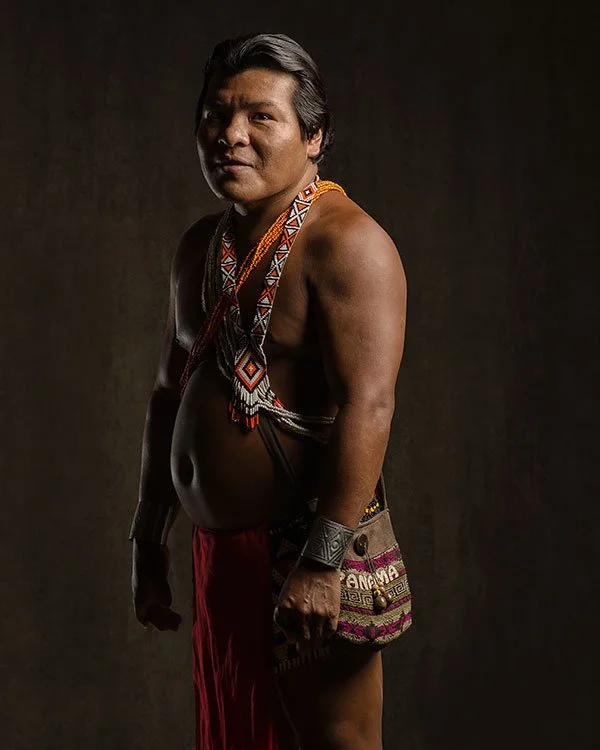
Language, clothing, beadwork, music and body painting continue because people continue to know them, use them and eventually introduce them to those who come after. Cultural preservation in that sense is less abstract than it sounds; ultimately, it depends on people.
Jagua was one of those elements I had not being able to photograph throughout the series, but on my final day at the village, around midnight, one of the guys approached me and said he had found some jagua and wanted to make a design on my arm. There was no ceremony and no elaborate explanation. He simply began drawing on my arm. Jagua designs within Emberá culture can carry different meanings depending on the design and context, but for me it felt like a gift.
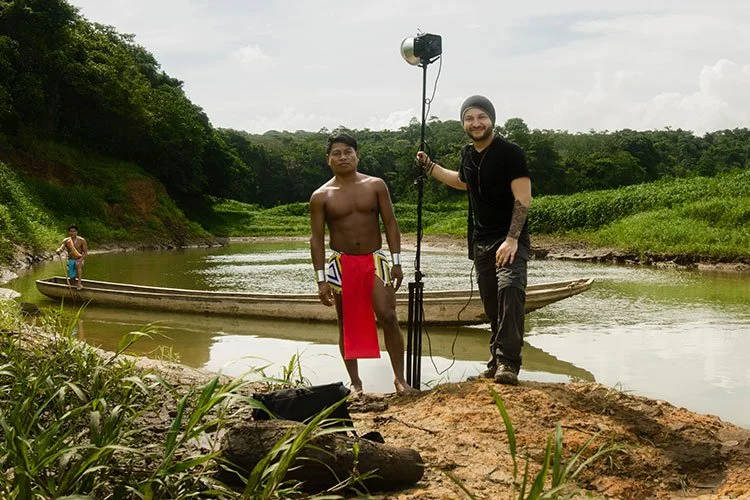
By the time I left the village, I was exhausted, covered in mud, sweat and mosquito bites, but considerably more fulfilled than when I had arrived. There was a sense of connection that, in Panama, they have a good word for:
FREN.
— Special thanks to the Embassy of Panama in El Salvador and the Panama Tourism Authority for their support in making this portrait series possible.
